Church of San Pedro in Portomarín: history, Romanesque art and what to see nearby
If you are wondering what to see in Portomarín, the Church of San Pedro deserves a place on your list. More modest than the well-known Church of San Nicolás, it preserves an essential part of the town's history and helps you understand what the old Portomarín was like before the Belesar reservoir was built.
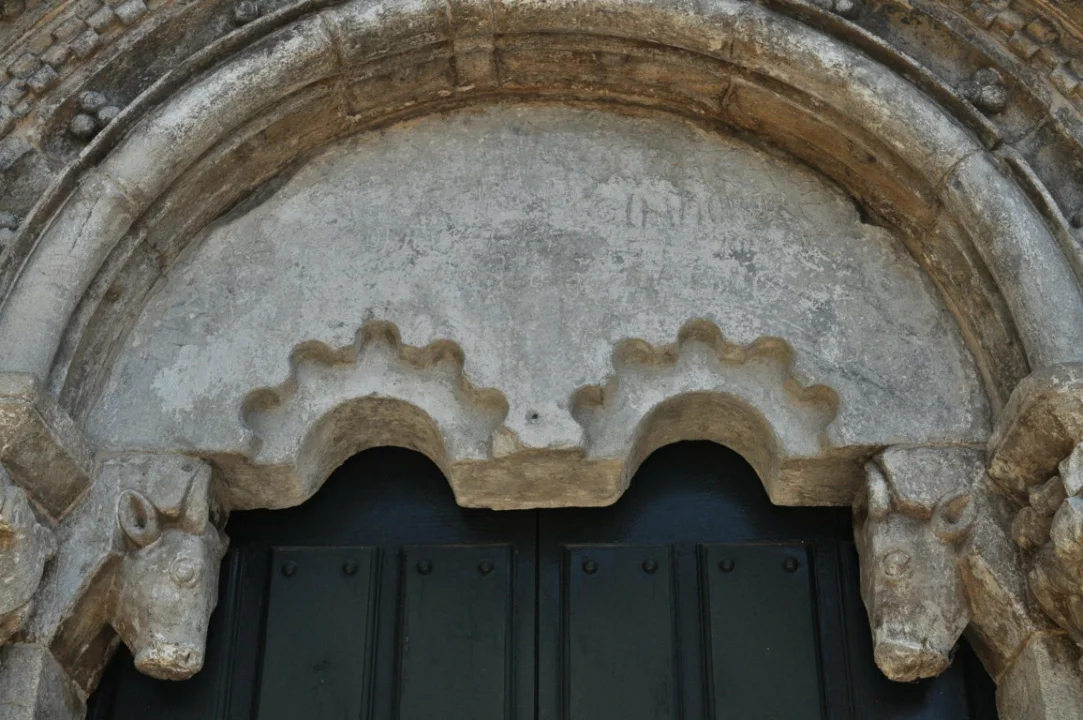
The Church of San Pedro in Portomarín is especially notable for its Romanesque doorway, moved from the old town when the village had to be rebuilt higher up. Today it is easy to visit on a stroll through the centre and to combine with other places linked to the Camino de Santiago, the river Miño and the town's heritage.
History of the Church of San Pedro in Portomarín
The Church of San Pedro has medieval origins and is part of Portomarín's valuable Romanesque heritage. The church dates from the 10th century and was consecrated in 1182 by Rodrigo II, Bishop of Lugo, as recorded in an inscription on its doorway.
Over the centuries the building was altered, but one of the most important moments in its history came in the 20th century, when the construction of the Belesar reservoir forced the old Portomarín to be moved.
Before the water covered the old town, some of its most important buildings were saved. The façade of San Pedro was taken apart and rebuilt stone by stone in its current location, just like other key monuments of Portomarín.
What to see at the Church of San Pedro
Although it is a relatively simple church, its façade is well worth a stop.
The Romanesque doorway is built of granite ashlar and keeps several decorative features typical of the style, including round arches, ornate archivolts and geometric motifs.
Inside there are also features of interest, such as a 16th-century altarpiece and the tomb of the Marquis of Bóveda.
Access to the interior may currently be limited to guided tours or certain opening hours, so check the official information before you go if you want to see inside.
“A living legacy shining in the heart of Portomarín.”
San Pedro and the story of the old Portomarín
Visiting the Church of San Pedro is also a way to learn about one of the most unusual episodes in Galicia's recent history.
That is why walking around Portomarín's churches today is also a walk through the memory of a place that had to rebuild itself without completely losing its identity.
What to see near the Church of San Pedro
From San Pedro it is easy to carry on and discover some of the main places to see in Portomarín.
About 250 metres away is the Church of San Nicolás, the town's great monumental symbol, and the river Miño, essential for understanding the history of the old Portomarín, is very close.
Many pilgrims arrive after a demanding stage and carry on to Palas de Rei the next morning, but it is worth setting aside a few hours to discover the town at a relaxed pace.
The Church of San Pedro, the Church of San Nicolás, the river Miño and the streets of the centre make an easy walk that shows you an important part of the local heritage without straying far from the Camino.
How to visit the Church of San Pedro during your stay in Portomarín
One of the advantages of staying in Portomarín is that many of its main sights can easily be reached on foot.
The Church of San Pedro is very close to the centre, so you can easily include it in a walk before dinner, after a stroll along the river Miño or on a quiet day if you decide to stay more than one night.
If you are walking the Camino de Santiago, being so close also lets you make the most of your rest without having to travel far.
Accommodation in Portomarín near the Church of San Pedro
If you are looking for accommodation in Portomarín on the Camino de Santiago, location can make a big difference.
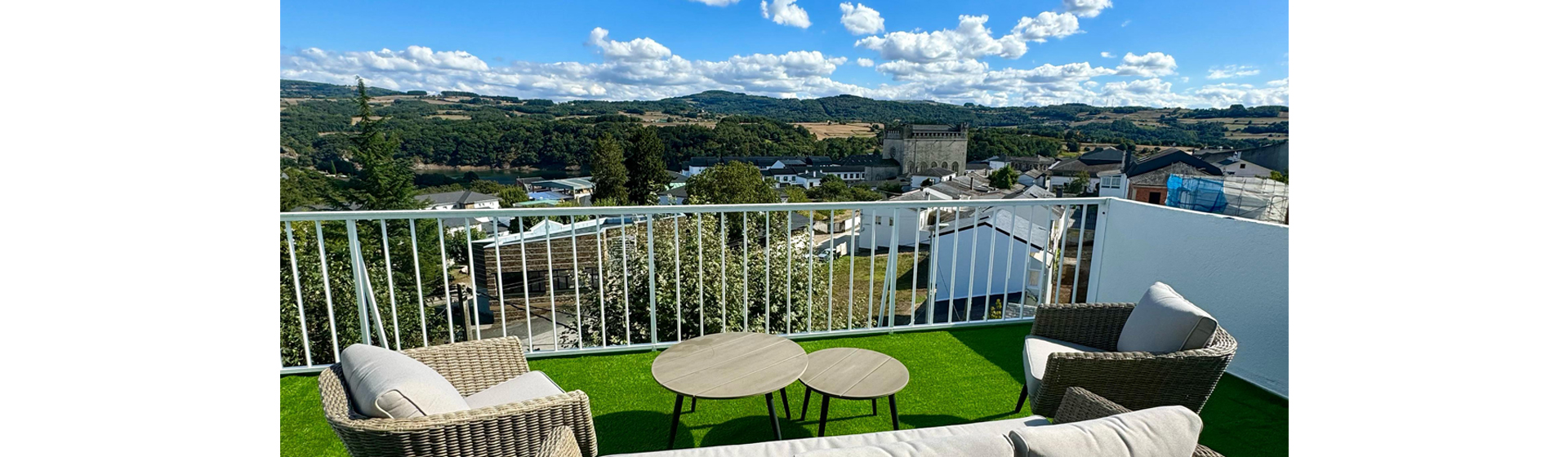
From PortoHome Ático you can walk to the Church of San Pedro in about 3 minutes, around 200 metres. That way you can discover Portomarín's heritage on foot and get back to your home with ease.
PortoHome Ático sleeps up to 7 guests and is a particularly good option for couples, families, small groups or pilgrims looking for more space and peace and quiet during their stay.
From the apartment you can also easily carry on to the Church of San Nicolás, the centre of Portomarín or the riverside walk along the Miño.
The Church of San Pedro shows that Portomarín has much more to offer than the best-known sights of the Camino de Santiago.
Its Romanesque doorway, the story of how the old town was moved and its closeness to other sights make it a simple but highly recommended stop.
And if you decide to stay a little longer, Portomarín can be your base for discovering the river Miño, the local viewpoints, the Ribeira Sacra and some of the most interesting landscapes of inland Lugo.
Discover PortoHome's homes and enjoy Portomarín with time, comfort and everything you need to feel that the journey also begins when the day's stage ends.